
The Global Ocean Observing System has published a set of practical lessons and recommendations to guide the implementation of co-design processes for ocean observing projects.
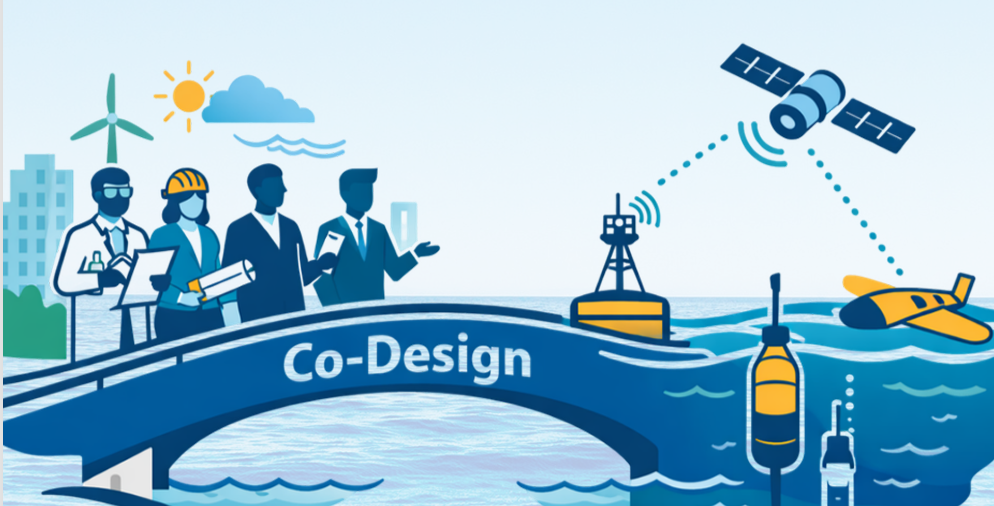
Sustained ocean observations are increasingly recognized as essential to the wellbeing, safety, and prosperity of all nations, coastal and landlocked alike. Ocean data coming from observing networks already underpin weather forecasts, climate management, maritime and coastal risk responses, biodiversity stewardship, and a sustainable ocean economy. However, many significant gaps remain, limiting the reliability of information and effectiveness of services that society depends on. Addressing these gaps requires a strategic approach to strengthening the existing ocean observing system to deliver the best value and impact for society.
The Global Ocean Observing System (GOOS), co-sponsored by the Intergovernmental Oceanographic Commission (IOC) of UNESCO and the World Meteorological Organization (WMO), coordinates sustained ocean observing efforts worldwide. At the beginning of the Ocean Decade, GOOS recognised the need to move beyond fragmented approaches to observing system design and towards co-designed systems that engage stakeholders across the value chain, establish clear priorities for investment, and ensure ocean information responds effectively to evolving global challenges.
“Co-design is integral to a supported and fit-for-purpose ocean observing system, and the GOOS Ocean Observing Co-Design programme was endorsed as a flagship Ocean Decade programme to embed co-design principles into global ocean observing efforts,” says Bernadette Sloyan, Co-Chair of the Ocean Observing Co-Design programme. In the center of the programme’s approach are the Co-Design Exemplars: projects designed to test, implement, and demonstrate new ways of linking observations, prediction, and user needs in operational contexts.
As the Ocean Decade reaches its mid-term, the Ocean Observing Co-Design community is reflecting not only on its achievements, but also on the processes that have driven the progress. “This marks an important transition from establishing co-design as a guiding principle to demonstrating its practical impact and deliverables. We identified approaches that enable this progress, and what is required to scale these approaches across the global ocean observing system,” says David Legler, Co-Chair of the GOOS Steering Committee and Ocean Observing Co-Design programme.
The Programme has consolidated a set of 10 powerful practical lessons from the Co-Design Exemplars in a newly published GOOS brief, providing guidance for implementing co-design processes for ocean observing projects of different scales and applications. The practical application of these processes is brought to life through the Programme’s Exemplars: Ocean Carbon, Marine Heatwaves, Boundary Currents, Storm Surge, and Tropical Cyclones.
The Ocean Observing Co-Design brief stresses that co-design will not reach its full potential to support impactful information delivery without broader changes in how it is supported, integrated, and sustained within the ocean observing system. Four recommendations where change is needed are highlighted:
- Seed funding for co-design engagement is necessary to deliver projects and actions designed for impact;
- Co-design needs to be integrated across GOOS at all levels as a fundamental component of future success;
- Regional engagement offers an effective scale for co-design action, combining regional context with global expertise and intent to maximise impact;
- Co-design requires sustained engagement and new skills to achieve effective outcomes.
The Ocean Observing Co-Design brief calls for a more integrated, responsive, co-designed, and sustainable global ocean observing system – one that is better equipped to deliver the information society needs to manage risk and adapt to a changing climate and ocean.
—
About GOOS:
The Global Ocean Observing System (GOOS) provides leadership and coordination for a global system of sustained ocean observations. It is the foundation for data-driven solutions for weather and extreme event forecasting, climate adaptation, coastal and maritime risk responses, biodiversity stewardship, and sustainable ocean economies. Through a globally integrated infrastructure of ocean observing networks, national and regional observing initiatives, and with the guidance of its expert panels, GOOS ensures the delivery of essential ocean information that supports ecosystems, economies, and communities worldwide. GOOS is a programme led by the Intergovernmental Oceanographic Commission (IOC) of UNESCO, and co-sponsored by the World Meteorological Organization (WMO), UN Environment Programme (UNEP) and the International Science Council (ISC).
About the Ocean Decade:
Proclaimed in 2017 by the United Nations General Assembly, the UN Decade of Ocean Science for Sustainable Development (2021-2030) (‘the Ocean Decade’) seeks to stimulate ocean science and knowledge generation to reverse the decline of the state of the ocean system and catalyse new opportunities for sustainable development of this massive marine ecosystem. The vision of the Ocean Decade is ‘the science we need for the ocean we want’. The Ocean Decade provides a convening framework for scientists and stakeholders from diverse sectors to develop the scientific knowledge and the partnerships needed to accelerate and harness advances in ocean science to achieve a better understanding of the ocean system, and deliver science-based solutions to achieve the 2030 Agenda. The UN General Assembly mandated the Intergovernmental Oceanographic Commission (IOC) of UNESCO to coordinate the preparations and implementation of the Decade.
About the IOC:
The Intergovernmental Oceanographic Commission (IOC) of UNESCO promotes international cooperation in marine sciences to improve management of the ocean, coasts and marine resources. The IOC enables its 153 Member States to work together by coordinating programmes in capacity development, ocean observations and services, ocean science and tsunami warning. The work of the IOC contributes to the mission of UNESCO to promote the advancement of science and its applications to develop knowledge and capacity, key to economic and social progress, the basis of peace and sustainable development.