
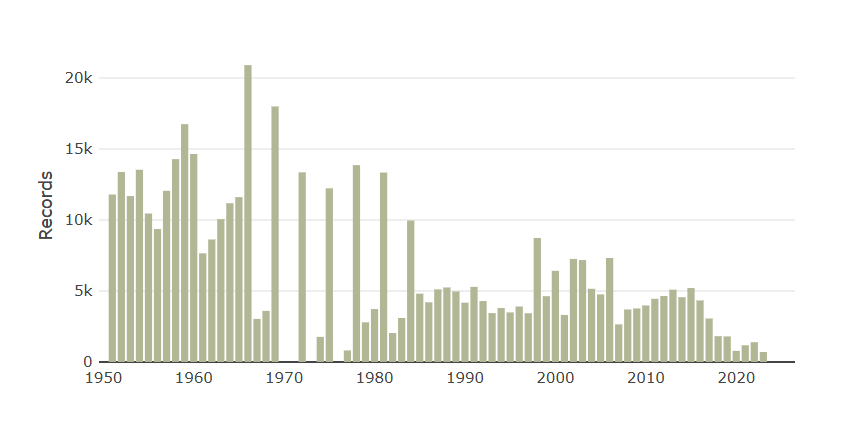
Spanning from 1951 to the present, the dataset representing one of the longest continuous records of marine fish early life stages in the world was recently published through the Ocean Biodiversity Information System. This is an extremely valuable contribution to the Fish Abundance and Distribution Essential Ocean Variable of the Global Ocean Observing System.
Long-term ecological and biodiversity time series are essential for detecting climate-driven shifts in marine ecosystems. Many ocean processes unfold over decades, and without sustained observations it is impossible to distinguish long-term trends from natural climate variability.
Fundamentally, these datasets cannot be replicated — you cannot go back in time to document the ecological states, species compositions, and environmental conditions of past decades. Long time series are the only direct window into the past, allowing us to understand and predict ocean changes in the future. Yet, such datasets still remain globally scarce.
A rare fish dataset now available for integration
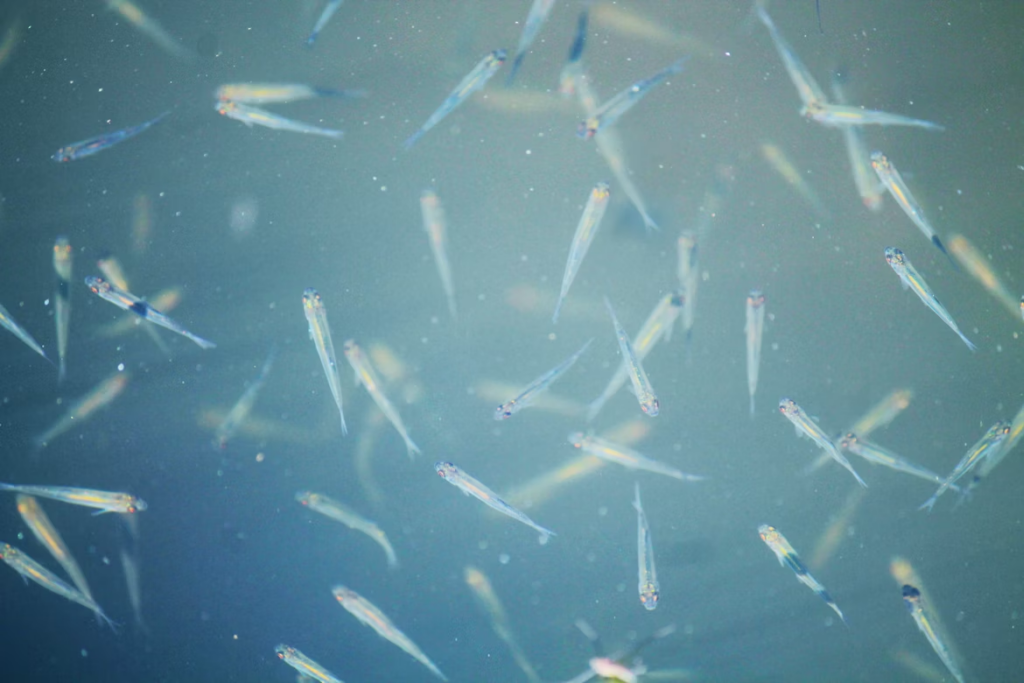
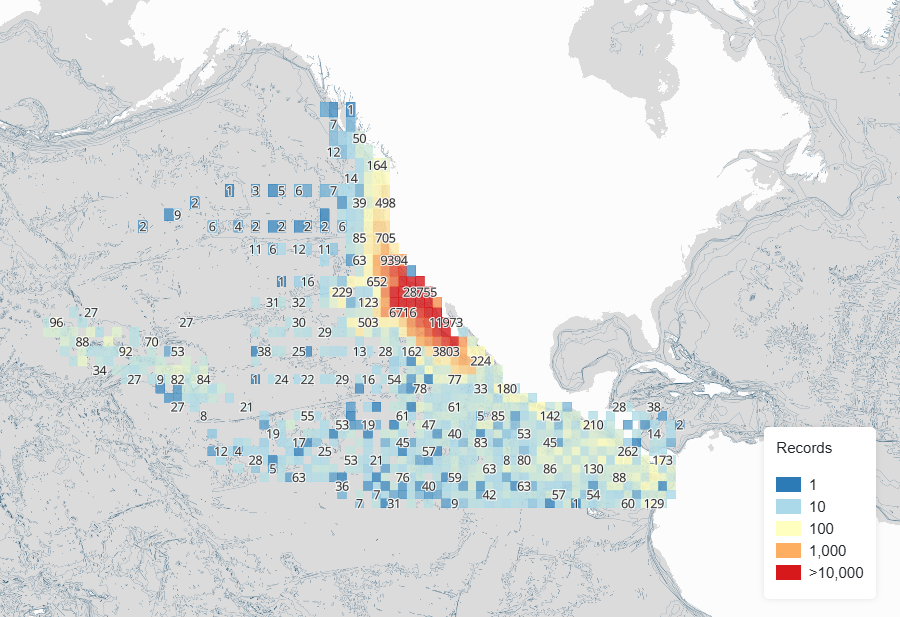
Just recently, one such rare dataset from the California Current ecosystem was included into the Ocean Biodiversity Information System (OBIS) of the Intergovernmental Oceanographic Commission (IOC) of UNESCO. For over 75 years, fish larvae have been systematically collected during research cruises along the California coast, forming one of the most extensive ichthyoplankton time series in existence. These observations originate from the California Cooperative Oceanic Fisheries Investigations (CalCOFI), a long-running ocean observing programme that has consistently sampled the same stations over time, building an unparalleled record of ecosystem variability and change.
The dataset includes information on the location and timing of sampling, the species observed, and abundance of larvae in the water, making it a key resource for studying long-term changes in fish populations, ocean ecosystems, and the effects of climate variability on fish populations along the California coast.
“These larval fish data have already helped to illuminate how large-scale climate fluctuations like the Pacific Decadal Oscillation and El Niño–Southern Oscillation influence sardine and anchovy population dynamics, a linkage that could only be detected through the program’s uniquely long, continuous time series capturing multiple regime shifts across decades,” says Erin Satterthwaite, the Coordinator for CalCOFI based at Scripps Institution of Oceanography, University of California San Diego.
Contribution to global Essential Ocean Variable observations
Integrating the fish larvae dataset into OBIS represents an important step for the Global Ocean Observing System (GOOS). Fish abundance and distribution is one of the 36 GOOS Essential Ocean Variables (EOVs) — the minimum set of variables that are needed to assess ocean state and variability. However, long-term open datasets for this EOV are rare.
The collaboration between GOOS and CalCOFI, with technical support from OBIS, directly addresses this critical gap by making one of the world’s longest and highest-quality fish larvae time series globally accessible through standardised data formats. This provides the international community with a concrete example of sustained EOV observations and establishes the technical pathways for other regional programs to follow.
“This initiative serves as a model for GOOS’s broader goal of integrating regional ocean observing programs into a coordinated global network, showing how established programs can contribute their legacy data to build the global baselines necessary for detecting and attributing ocean ecosystem changes,” says Ana Lara-Lopez, Lead Scientific Officer of the GOOS Biology and Ecosystems Expert Panel.
“Furthermore, this strengthens GOOS’s capacity to support international assessments such as the World Ocean Assessment, as well as multilateral agreements such as the Kunming Montreal Global Biodiversity Framework and the Biodiversity Beyond National Jurisdiction Agreement. We want to ensure that critical biological time series data are not isolated in institutional repositories, but are instead integrated into the global system, where the information can inform evidence-based ocean management and climate adaptation strategies at both regional and global scales,” she added.
Looking ahead: expanding access to more biological observations
The integration of CalCOFI’s fish larvae dataset into OBIS represents only the first step in this ambitious collaboration. Other biological observations from CalCOFI and associated partners will be progressively included to support the biology and ecosystems EOVs, such as marine mammals, seabirds and plankton, helping to create an unprecedented contribution of globally accessible, long-term datasets. Furthermore, there is potential to establish data pipelines to include CalCOFI’s long-term datasets of physics and biogeochemistry EOVs, expanding and demonstrating the value of an integrated long-term observing system.
This phased expansion highlights CalCOFI as a model case study demonstrating how a sustained marine ecosystem observing program can contribute simultaneously to multiple EOVs, from physics to marine mammals. Furthermore, it provides the international community with a blueprint for contributing to the global ocean observing system and establishing technical workflows and data standards which can be shared (see section “More details” below).
“The collaboration between CalCOFI and GOOS demonstrates the value of making long-term biological data openly available through global platforms to support multiple opportunities for their use in decision making,” says Joanna Post, GOOS Director. “We hope it inspires other long-term observing programs to coordinate with GOOS and IOC, and publish their data in OBIS, which will result in a strengthened system and connected, interoperable, and usable global biodiversity record for all.”
More details: A reproducible workflow for serving data
This CalCOFI fish larvae dataset in OBIS is the result of a new CalCOFI initiative to integrate data and automate workflows that ingest data into a common database and publish to portals using reproducible workflows. Dubbed and found online at CalCOFI.io (“io” is short for input/output), these workflows use a scientific programming language (R) in renderable notebooks (Quarto) to ingest datasets into a relational database (DuckDB). The data is then compiled into portal-specific dataset packages using dedicated notebooks. For publishing the fish larvae dataset into OBIS, this requires formatting the data into the DarwinCore archive standard with the specific workflow detailed here. The integrated database is also available via a library of documented functions (calcofi4r) and through interactive applications (Shiny framework). See CalCOFI.io for more information.
About GOOS:
The Global Ocean Observing System (GOOS) provides leadership and coordination for a global system of sustained ocean observations, based on a set of Essential Ocean Variables. It is the foundation for data-driven solutions for weather and extreme event forecasting, climate adaptation, coastal and maritime risk responses, biodiversity stewardship, and sustainable ocean economies. Through a globally integrated infrastructure of ocean observing networks, national and regional observing initiatives, and with the guidance of its expert panels, GOOS ensures the delivery of essential ocean information that supports ecosystems, economies, and communities worldwide. GOOS is a programme led by the Intergovernmental Oceanographic Commission (IOC) of UNESCO, and co-sponsored by the World Meteorological Organization (WMO), UN Environmental Programme (UNEP) and the International Science Council (ISC).